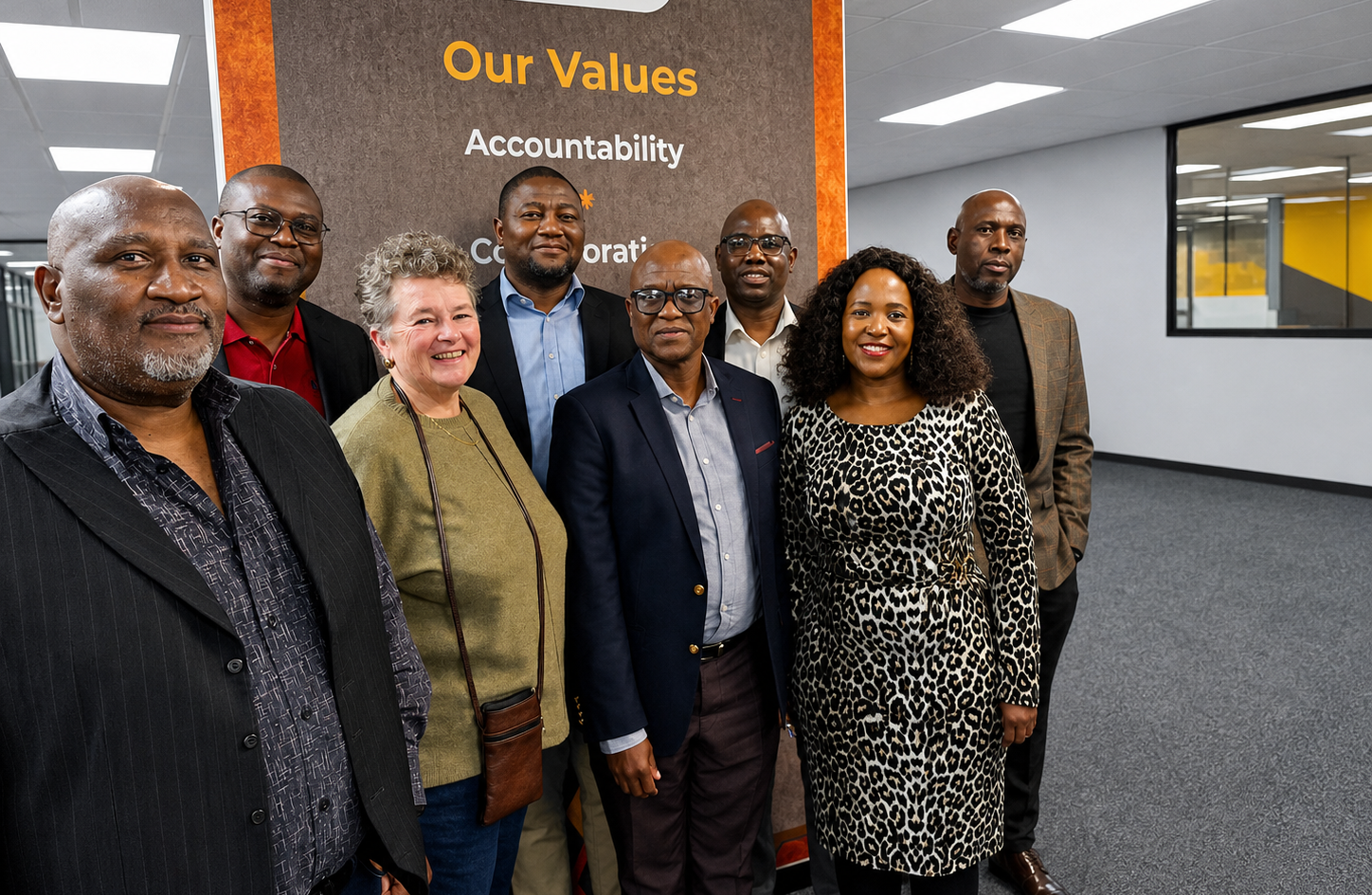
The Matthew Goniwe School of Leadership and Governance (MGSLG) has officially launched its highly anticipated Round-Table Engagement Series, an initiative designed to bring together leading education experts, policymakers, and sector leaders to deliberate on professional development strategies capable of improving learner outcomes across the education landscape.
On 5 May 2026, the inaugural engagement featured renowned education expert Professor Mary Metcalfe, who shared valuable insights drawn from her extensive experience in education governance, administration, research, and systemic reform.
Central to the engagement was the work being undertaken through the Programme to Improve Learning Outcomes (PILO), whose mandate is to support provincial and national departments, together with sector-aligned entities, in developing sustainable change methodologies aimed at improving education outcomes.
Professor Metcalfe’s address provided a practical and strategic perspective on systemic reform within education, challenging traditional approaches to professional development while proposing sustainable frameworks for long-term improvement within schools and institutions.
Key Insights from the Engagement
1. Institutionalizing Change for Long-Term Sustainability
Short-term interventions and isolated professional development programmes are no longer sufficient to address systemic challenges. Sustainable reform requires change to be embedded within school governance structures and daily institutional operations. Professional development initiatives must evolve from temporary projects into permanent, integrated systems that support continuous educator growth.
2. Aligning Teacher Training with Occupational Reality
The engagement highlighted the growing disconnect between theoretical teacher preparation and the practical realities faced in classrooms. Teacher development programmes must be redesigned to address everyday occupational demands, including large classroom management, diverse learner needs, resource limitations, and curriculum delivery pressures.
Aligning training with practical classroom realities equips educators to make immediate and meaningful improvements in learner performance.
3. Transforming Data and Reports into Decision-Making Tools
While significant volumes of educational data and compliance reports are generated across the sector, these often fail to influence classroom practice. Professor Metcalfe emphasized the importance of repositioning reporting processes from administrative compliance exercises into strategic decision-making tools.
“Performance data and evaluation reports should actively inform leadership decisions, targeted interventions, and resource allocation within schools and institutions.”
4. Embracing Organic Complexity in Problem-Solving
The education ecosystem is complex and deeply interconnected. Linear, one-size-fits-all solutions often fail to address the realities faced by schools and communities. Sector leaders were encouraged to adopt an “organic complexity” approach that recognises local socio-economic dynamics and supports flexible, adaptive problem-solving strategies.
Looking Ahead
The inaugural round-table engagement reaffirmed MGSLG’s commitment to strengthening professional development and leadership capacity across the education sector.
By rethinking how teachers are trained, how educational data is utilised, and how interventions are sustained, the Round-Table Engagement Series seeks to contribute meaningfully towards building a resilient education system that improves learner outcomes across Gauteng Province.